
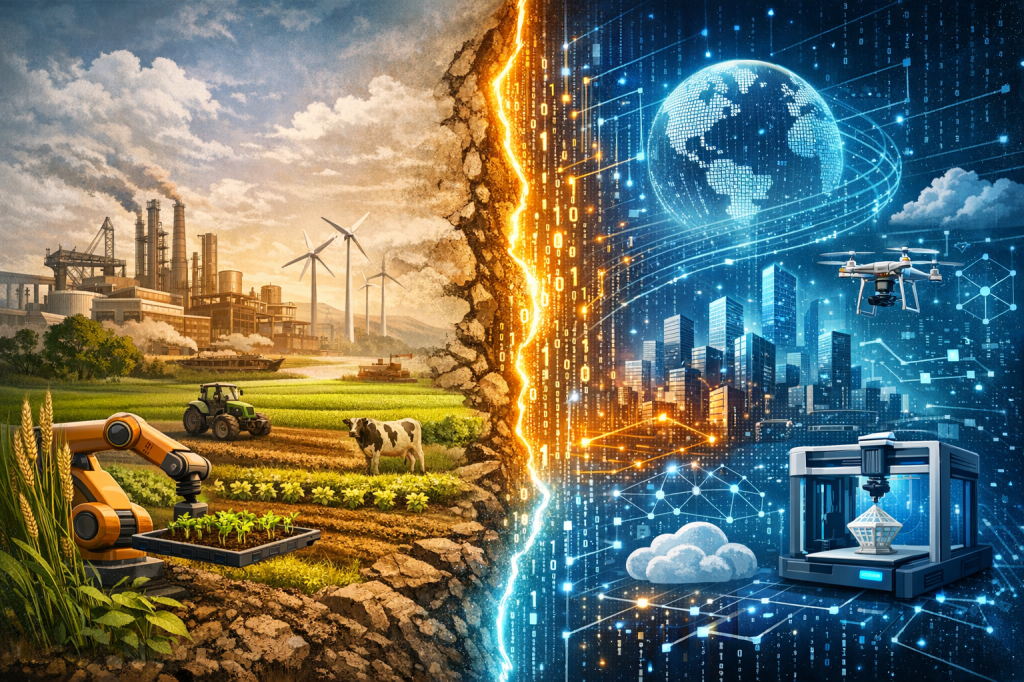
The transition from the material world to the digital one is among the defining transformations of the 21st century. It is often portrayed as a shift from a heavy, slow, and constrained reality to a light, fast, and nearly infinite one. Yet this image is partial and misleading. In practice, the digital does not replace the physical world—it rests upon it, accelerates it, and at times intensifies its limitations. The tension between these two realms is not merely technological; it is economic, environmental, cognitive, and political. It is especially visible in food systems, but it follows the same logic across other physical industries such as energy, manufacturing, and infrastructure.
One of the central myths of the digital age is the idea of a “weightless world.” The move to cloud computing, data-driven management, and smart systems is often perceived as cleaner and greener: less paper, fewer trips, less material. Yet behind the seamless interface lies a massive physical infrastructure. Data centers consume energy and water at the scale of heavy industries; communication networks depend on the extraction of rare metals; advanced computing equipment becomes obsolete quickly and must be replaced.
The same is true in food and agriculture. Digitalization is far from immaterial. Sensors, drones, satellites, control systems, and agricultural AI all rely on physical devices, energy, and communication infrastructure. Similarly, in smart factories or autonomous production systems, every additional layer of software ultimately translates into machines, motors, materials, and energy flows.
Moreover, digital efficiency often produces material inflation. The easier it becomes to order, manage, and optimize, the more atoms are set in motion. In food systems, advanced supply-chain management enables high availability and diversity, but it also increases transportation, refrigeration, packaging, and waste. In industry, digital optimization raises productivity but accelerates equipment wear, raw material consumption, and pressure on natural resources.
At the core of this tension lies a collision between two fundamentally different rates of change. The digital world advances exponentially: algorithms improve rapidly, software updates overnight, and computing costs decline. By contrast, the physical world—whether a field, a factory, or an electrical grid—moves linearly. Crops grow in seasons, buildings are constructed over years, and infrastructure is designed for decades. The laws of physics, biology, and engineering do not obey the rhythm of software updates.
This gap generates a profound economic tension. We live in a world of digital deflation, where software, data, and computation become cheaper, alongside material inflation, where land, energy, water, and raw materials grow more expensive and scarce. In food systems, this is reflected in rising agricultural input costs and increasing vulnerability to climate shocks. In industry, it appears in dependence on fragile global supply chains and shortages of critical minerals.
Out of this tension emerges an intermediate layer: the zone where digital tools attempt to inject speed and flexibility into the physical world. Digital twins of fields, factories, power plants, or entire cities allow scenarios, failures, and optimizations to be tested virtually before costly and risky physical implementation. Simulations replace large numbers of physical experiments—whether for an aircraft wing, a food formulation, or an irrigation protocol.
Modularity is another shared acceleration mechanism. In agriculture, this appears in modular greenhouses, controlled-environment farming systems, or industrialized livestock facilities. In industry, it takes the form of platform-based production lines, prefabricated construction, or standardized components. The goal is the same: to make the physical world less bespoke and more reconfigurable.
A more advanced stage is the Software-Defined paradigm: physical assets whose functionality can be altered through software. In food processing, this means changing fermentation, processing, or storage protocols without replacing production lines. In manufacturing, it means machines that gain new capabilities through software updates. The hardware remains; behavior changes.
Yet even when technology enables acceleration, a deeper constraint emerges: the human one. Not only materials limit the pace of change, but psychology, culture, and society do as well. Adapting to a new app is easy; changing dietary habits, urban form, or industrial structure is not. Food, energy, and infrastructure are deeply embedded in identity, security, and politics. The gap between the speed of innovation and the speed of social adaptation generates frustration, resistance, and often mistrust.
Thus, the central challenge of the coming decade is not to build smarter digital systems, but to use digital capabilities to confront the crises of the physical world: climate change, resource scarcity, food security, and resilient infrastructure. The decisive question will not be how fast we can conceive ideas, but how fast we can permit, build, and implement them in fields, factories, and public space.
Ultimately, food systems and physical industries remind us of a basic truth: bits can accelerate, optimize, and guide—but atoms, soil, machines, and energy set the pace. The future will not be shaped by denying these constraints, but by learning how to work with them intelligently.
בין ביטים לאטומים: מזון, תעשייה והקיר הפיזיקלי של העידן הדיגיטלי
המעבר מעולם החומר לעולם הדיגיטלי הוא אחד מתהליכי העומק המעצבים של המאה ה־21. הוא מוצג לעיתים כמעבר ממציאות כבדה, איטית ומוגבלת לעולם קל, מהיר וכמעט אינסופי. אך הדימוי הזה חלקי ומטעה. בפועל, הדיגיטל אינו מבטל את עולם החומר – הוא נשען עליו, מאיץ אותו, ולעיתים אף מחריף את מגבלותיו. המתח בין שני העולמות אינו רק טכנולוגי; הוא כלכלי, סביבתי, תודעתי ופוליטי. הוא בולט במיוחד במערכות המזון, אך אינו ייחודי להן – אותן דינמיקות פועלות גם בתעשייה, באנרגיה ובתשתיות.
אחד המיתוסים המרכזיים של העידן הדיגיטלי הוא רעיון ה״עולם ללא משקל״. המעבר לענן, לדאטה ולניהול חכם נתפס כנקי וירוק יותר: פחות נייר, פחות נסיעות, פחות חומר. אך מאחורי הממשק החלק מסתתרת תשתית חומרית עצומה. חוות שרתים צורכות אנרגיה ומים בהיקפים של תעשיות כבדות, רשתות תקשורת נשענות על כרייה של מתכות נדירות, וציוד חישוב מתקדם מתיישן במהירות ודורש החלפה.
גם במזון ובחקלאות, ה״דיגיטציה״ אינה חסרת משקל. חיישנים, רחפנים, לוויינים, מערכות בקרה ו-AI חקלאי נשענים על ציוד פיזי, אנרגיה ותשתיות תקשורת. בדומה לכך, בתעשייה חכמה או במפעלים אוטונומיים, כל שכבת תוכנה נוספת מתורגמת בסופו של דבר למכונות, מנועים, חומרים וזרמי אנרגיה.
יתרה מכך, היעילות הדיגיטלית יוצרת לעיתים אינפלציה חומרית. ככל שקל יותר להזמין, לנהל ולתזמן – כך גדלה תנועת האטומים. בתחום המזון, ניהול שרשראות אספקה מתקדם מאפשר זמינות גבוהה ומגוון רחב, אך גם מגדיל את השינוע, הקירור, האריזות והפסולת. בתעשייה, אופטימיזציה דיגיטלית מגדילה תפוקה, אך גם מאיצה בלאי של ציוד, צריכת חומרי גלם ולחץ על משאבים.
שורש המתח נעוץ בהתנגשות בין שני קצבי שינוי. העולם הדיגיטלי נע בקצב אקספוננציאלי: אלגוריתמים משתפרים, תוכנה מתעדכנת בן־לילה, עלויות חישוב יורדות. לעומתו, עולם החומר – בין אם מדובר בשדה חקלאי, מפעל פלדה או רשת חשמל – נע בקצב ליניארי. צמחים גדלים בעונות, מבנים מוקמים בשנים, ותשתיות מתוכננות לעשורים. חוקי הפיזיקה, הביולוגיה וההנדסה אינם מצייתים לקצב של עדכון תוכנה.
הפער הזה יוצר מתח כלכלי עמוק. אנו חיים בעולם של דפלציה דיגיטלית – תוכנה, דאטה וחישוב נעשים זולים יותר – לצד אינפלציה חומרית: קרקע, אנרגיה, מים וחומרי גלם מתייקרים והופכים נדירים. במזון זה מתבטא בעליית מחירי תשומות חקלאיות ובפגיעות לאקלים. בתעשייה זה ניכר בתלות בשרשראות אספקה גלובליות ובמחסור במינרלים קריטיים.
מתוך המתח הזה נוצרת שכבת ביניים: אזור המפגש שבו הדיגיטל מנסה “להזריק” גמישות ומהירות אל תוך עולם החומר. תאומים דיגיטליים של שדות, מפעלים, תחנות כוח או ערים מאפשרים לבחון תרחישים, כשלים ואופטימיזציה במרחב וירטואלי לפני יישום פיזי יקר ומסוכן. סימולציות מחליפות ניסויים פיזיים מרובים – בכנף מטוס, במתכון מזון, או בפרוטוקול השקיה.
גם מודולריות היא מנגנון האצה משותף. בחקלאות – חממות מודולריות, מערכות גידול מבוקרות או רפתות מתועשות. בתעשייה – קווי ייצור מבוססי פלטפורמות, בנייה טרומית או רכיבים סטנדרטיים. המטרה דומה: להפוך את עולם החומר לפחות חד־פעמי ויותר ניתן להרכבה, פירוק ושינוי.
שלב מתקדם יותר הוא תפיסת ה־Software Defined: חומר פיזי שתפקודו משתנה דרך תוכנה. במזון זה מתבטא בשינוי פרוטוקולי עיבוד, תסיסה או אחסון מבלי להחליף קו ייצור. בתעשייה – מכונות שמקבלות יכולות חדשות דרך עדכון תוכנה. החומר נשאר, אך ההתנהגות משתנה.
אולם גם כאשר הטכנולוגיה מאפשרת האצה, מופיע חסם עמוק נוסף: האדם. לא רק החומר מגביל את הקצב, אלא גם הפסיכולוגיה, התרבות והחברה. קל להתרגל לאפליקציה חדשה; קשה לשנות הרגלי תזונה, מבנה עירוני או תעשייה שלמה. מזון, אנרגיה ותשתיות נטועים בזהות, בביטחון ובפוליטיקה. הפער בין קצב החדשנות לבין קצב ההסתגלות מייצר תסכול, התנגדות ולעיתים חוסר אמון.
לכן האתגר של העשור הקרוב אינו לפתח דיגיטל חכם יותר, אלא להשתמש בדיגיטל כדי להתמודד עם משברי עולם החומר: אקלים, משאבים, מזון ותשתיות. השאלה הקובעת לא תהיה כמה מהר אפשר לחשוב על רעיון, אלא כמה מהר אפשר לאשר אותו, לבנות אותו ולהטמיע אותו בשדה, במפעל ובמרחב הציבורי.
בסופו של דבר, מזון ותעשיות פיזיות אחרות מזכירים לנו אמת בסיסית: הביטים יכולים להאיץ, לייעל ולכוון – אך האטומים, האדמה, המכונות והאנרגיה הם שקובעים את הקצב. העתיד ייוולד לא מהכחשת המגבלות הללו, אלא מהיכולת לעבוד איתן בתבונה.
 eyal-shimon-i.blog
Leave a comment