I have no air, my head turns, and it feels like almost fainting. I’ve been fighting every step for the last 15 minutes. It cannot be that after only 20 km I will be the first to withdraw from the race… On the other hand, I have a family to get back to, and what is this race anyway? Sit, relax, try to figure out what’s going on. So I sat down, face to the valley from which I came and the contestants who were passing me one by one. I quickly realized I didn’t take food on time and I had a severe sugar drop. Pack of candies, 20 minutes to let the sugar be absorbed, get up, slowly, and start to climb up slowly over the steep slope. This is how my iconic event appeared in the race, and this is probably why I also finished.
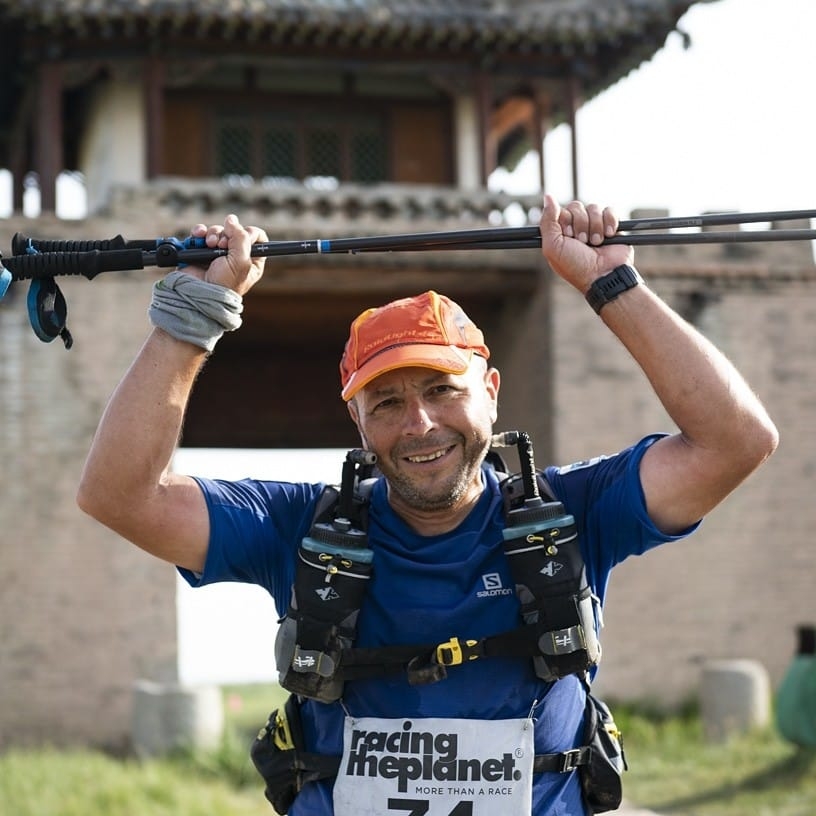
In fact the affair with the running started at the age of 8 but on this a few words at the end… My serious romance with running started about nine years ago. At first several kilometers in the Ramot Menashe, and slowly I went out to the hills. With the enjoyment of running in the area comes the appetite, and from there the way was short to the marathon. There I realized that me and urban running is not a love story, and what really fills me up is the time in nature, on the trails, day, night, and so on in the rain and mud. Here I discovered the world of the ultramarathon – hours on the hours of nature, of a personal challenge, of exploring the physical and mental borders. As “smart” said “running long distances 90% is mental and all the rest in the head”.
A year and a half ago I sat down for coffee with a Pano Koter, and told him about my idea of running the Gobi-March, a 250 km race consisting of 6 stages, 4 of about 40 kilometers, one of 70 kilometers, and 10 kilometers at the end. A significant challenge for amateur runner and not particularly outstanding as I am. The format is self-supported so you have to carry everything on your back. The route in Mongolia passes through a variety of mountain and flat landscapes, forests, rivers, dunes, when the weather can move below zero to over 50 degrees centigrade. The competitors only get water, a tent at the end of the day, and a bonfire. The race is part of The 4 Deserts Race Series: Gobi in Mongolia, Namibia in Africa, Atacama in Chile and Antarctica. At the end of the conversation, he said to me, “sounds absolutely possible.” Just like that, my coach says.
The preparation for the race was physical, material, and mental. Pano split the preparation into two parts: 9 months of base and nine for the race itself. The first part was done with 66km in the “Sovev emek” race, and two weeks later, another 90 on the Carmel-Trail route along with Orna Altman. The focus of the material preparation was the choice of equipment. Each runner is required to carry a mandatory list of 35 items. This significant part of the preparation ended in my backpack with 9.2 kg before water. The mental preparation was constructed naturally by long training hours on the legs and countless back-to-back runs. Also, my goals in the race have proven itself: 1. Stand on the starting line, 2. A healthy finish with a smile, and 3. For the ego – not to be last…
To Ulaanbator, the capital of Mongolia, where the gathering and briefings are held, I arrived two days before heading out to the area on a flight through Moscow. I used the time for walking tours in the city, to know it, but also to reset the biological clock. At the same time, I arranged the backpack according to the race program – the food was divided into days from the bottom up, the electrolytes in the side pocket, the clothes equipment and the gear in the back pocket. The sleeping bag and the mattress have been compressed in turn to another the side pockets, and the warm clothing above the food in the main pocket. Then, on Saturday morning the race process began to roll.
In the morning we gathered for the briefing, all looking right and left to understand with whom they will spend the next week. Some are familiar from past races, jokes, hugs. Then a careful inspection of equipment, boarding six small yellow buses and heading out towards the first camp race near the KHAR BUKH BALGAS fortress. Like rookies we went through the red camp gate with the sign “GOBI MARCH 2019”. Then we met the tent partners. Tent 14: Beth from Kenya, Nicolaj of Hungary, Nuria and Albert of Catalonia, the American Libby from Seoul, and me. First night, irregular sleep, crazy stars, then morning comes. Quiet alert of organizing, final briefing, and underway!

(Photo by Thiago Diz/4 RacingThePlanet/Gobi March
The first part started great and just at the pace I imagined. The road is half sandy half-white, low bushes and a strong scent of lavender in the air. Around us endless spaces and sky in depth and unperceived width. I’m passing through a Mongol nomads tent and a local family waving peace, crossing a stream and advancing. After 15 km begins pain in the right shoulder – “It’s probably not sitting well, I’ll straighten up” I’m conning myself. I am way ahead the “cut-off” beyond the 20th kilometer to the beginning of the great ascent. Then all of a sudden, the air, the fall of sugar, after I chew candies, I remind myself to listen to the body and like any other ultra race to adapt to the track and its demands… Getting to the end line of the day is happy, and I am sitting to eat with Renzo, the oldest participant – 71. I eat freeze-dried food, and the experienced veteran, like a good Italian, prepares for a tortellini with fragrant sauce and Parmesan cheese… Only the wine was missing.

(Photo by Thiago Diz/4 RacingThePlanet/Gobi March
To the second day, we wake up after a rainy storm and crazy winds all night. It’s cold, wet, but they’re all smiling. A rough day of meadows and countless climbs . Rain almost nonstop throughout the majority of 45 kilometers with fierce winds. With mild hypothermia I reach the finish line at the opening of a big Gerr camp. How good it is to make a night in a warm gerr. From here every morning I was taping the fingers that were suspected of developing blisters.

(Photo by Thiago Diz/4 RacingThePlanet/Gobi March

(Photo by Thiago Diz/4 RacingThePlanet/Gobi March
The “warm-up” at the beginning of the third day comes in the form of climbing about 2 km up a steep bolder ridge. From the summit, there is a lovely single in a blooming landscape that looks like a Japanese postcard down to the monastery of Erdene Khamba. The second aid station I am asked to take extra water as we go into the dunes. How beautiful and blooming they are. As I entered them unfocused, I lose the calm in the dunes. After almost seven kilometers and a moment before I “Lose it”, I threw the backpack over a bush and stopped to refocus myself and reset it. The exit from the dunes was easier. I completed the part with a great sense of relief. At night in the tent I planned the next stage strategy, the Long March.

(Photo by Thiago Diz/4 RacingThePlanet/Gobi March
For the 77 kilometers of the Long March, I made a decision to move very slow. Because of fatigue and because of the forecast of over 35 degrees, I chose to control my energy. After 20 km caught up with Varun that was severely limping. After a brief inquiry, he agreed that I would take care of him. I picked up his kneecap by taping and he started to walk better. The control point in the middle of the distance is celebrated by providing cold soda cans to the competitors, delight! The endless and flat-out scenery and the sandy nature of the road make you lose the sense of time. I was very happy to get to the fourth aid station, where there were also hot water. I pulled out a personalized package of coffee and a snack, a little rest before the night. Because at night it is only permissible to move in couples, I went out with Mike and Alfonso. After 200 meters, Mike did not feel well and I helped him back to a little bit of sleep, from here on it’s just Alfonso and me. Very quickly it turns out that this fellow is a cardiologist from Sicily – “Good to have one with me” I smile. Alfonso asks that I draw him, and I agree with a smile with one condition: that we stop at midnight, turn off our flashlights and listen to “A Whiter Shade of Pale” under the stars in the Gobi. And so it was. Unaware that in Israel lilach is “climbing the walls” since the race website crashed, I was happy to finish after 18 hours and go to sleep. Tomorrow’s rest day…

(Photo by Thiago Diz/4 RacingThePlanet/Gobi March

(Photo by Thiago Diz/4 RacingThePlanet/Gobi March
The last long day (stage 5) consisted of multiple crossings of the Orkhon River. The Orkhon valley is full of flocks of horses galloping, and endless fields of lavender flowering. After about at third of the way, we started climbing up a river that was drenched in flowering and scattered cedar trees that became the forest at the end. Many parts of it felt like a hallucination with purple and pink flowers. After reaching the peak altitude, we rolled down towards the last crossing of the floating Orkhon river, passing the hairy yaks in the pasture. The spirit of the special race brought about everyone who had already arrived and a large part of the volunteers and the dedicated medical staff who accompanied us to the river to applaud the coming. I couldn’t help but be excited about the tears of the Anjeles, a gifted runner, with tears in her eyes when she saw the last of the runners coming.

(Photo by Thiago Diz/4 RacingThePlanet/Gobi March

(Photo by Thiago Diz/4 RacingThePlanet/Gobi March

(Photo by Thiago Diz/4 RacingThePlanet/Gobi March

(Photo by Thiago Diz/4 RacingThePlanet/Gobi March

(Photo by Thiago Diz/4 RacingThePlanet/Gobi March
The last day of the race started early. We crossed the river, and after a few kilometers of a moderate climb the village of the town of Karakorum. On the way to the end in Erdene Zuu stands Josephine the volunteer and cries of emotions, and just before the entrance gate to the monastery I also have tears in my eyes… The passage through the finish gate feels like a movie, as if I wasn’t there, as if there were not 250 kilometers between me and the starting point. With the last battery percentages I called to wake Lilach and rejoice together. Without her, it wouldn’t have happened.

(Photo by Thiago Diz/4 RacingThePlanet/Gobi March
One does not run a race like this alone. You run with the family in your heart, with the support of your friends, and a lot with yourself. And also with the poems that Lilach gave me, and mostly read to myself, but I also translated to my friends in the tent and to the staff (Abraham Chalfi was the star). I was also encouraged by the fact that I am exploiting the race to promote two organizations that are very important to me: “Yadid-Lachinuch (A Friend for education)” and the Perthes Kids Foundation. The feeling of being able is something that stays with you the rest of your life, and as a child who could not step on the left foot for three years, I am fortunate to support other children as well. Even a 54-year-old child is allowed to dream.
To the next challenge.
With love.
Eyal
*** Do not forget to support Yadid Lachinuch the the Perthes Kids Foundation

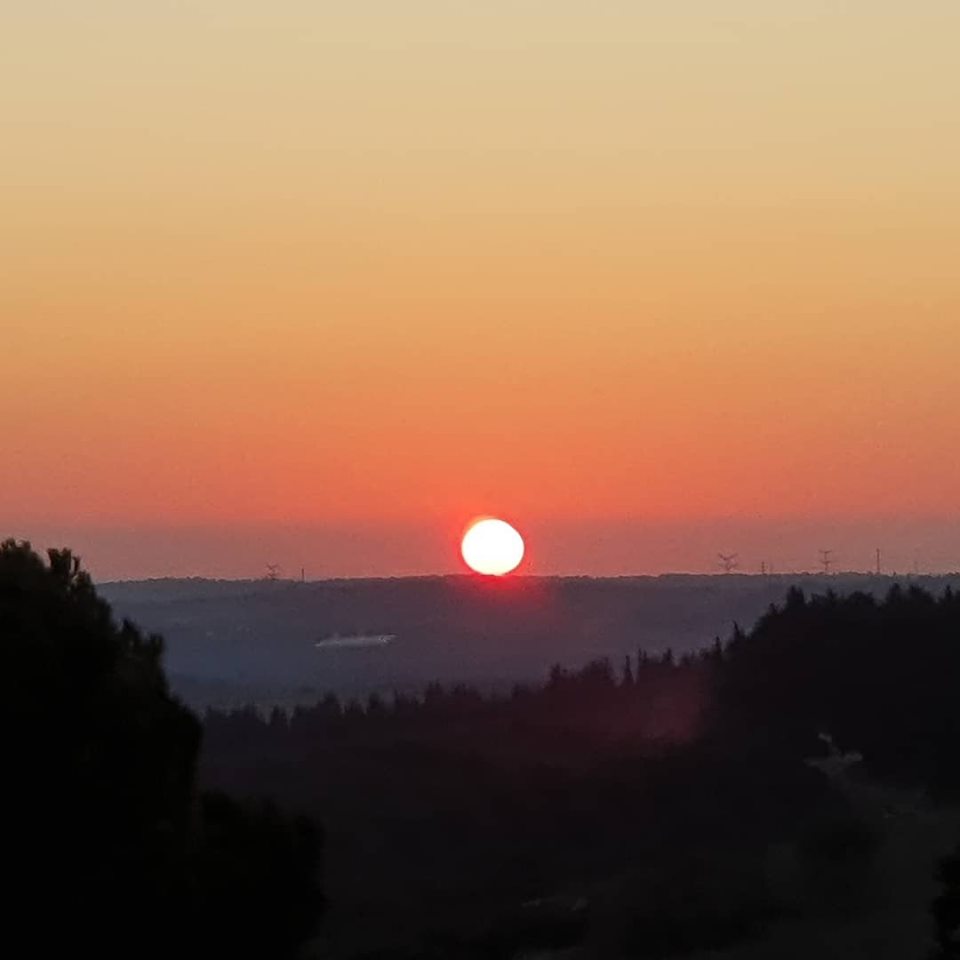 ככה יצא שראש השנה התערבב עם יום ההולדת שלי ובלי לשים לב המחשבות על השנה החדשה מתערבבות עם המחשבות על השנה ה-56 שלי על הכדור. יש מן נטייה כזו לעשות סיכומים ומהם להתחיל לדבר על העתיד, אבל אותי זה קצת פחות מעניין. יש לנו עיניים בחזית הראש, ולכן טבעי יותר להסתכל קדימה. אז מה קדימה?





 eyal-shimon-i.blog